Orthodox Christian “therapy for the soul” (often called Orthodox psychotherapy or the science of spiritual medicine) refers to the entire ancient tradition of the Eastern Orthodox Church as a healing system for the human soul, mind, and body, wounded by the Fall, sin, passions, and death.
This understanding is most famously articulated in the modern classic Orthodox Psychotherapy: The Science of the Fathers by Metropolitan Hierotheos (Vlachos) of Nafpaktos.
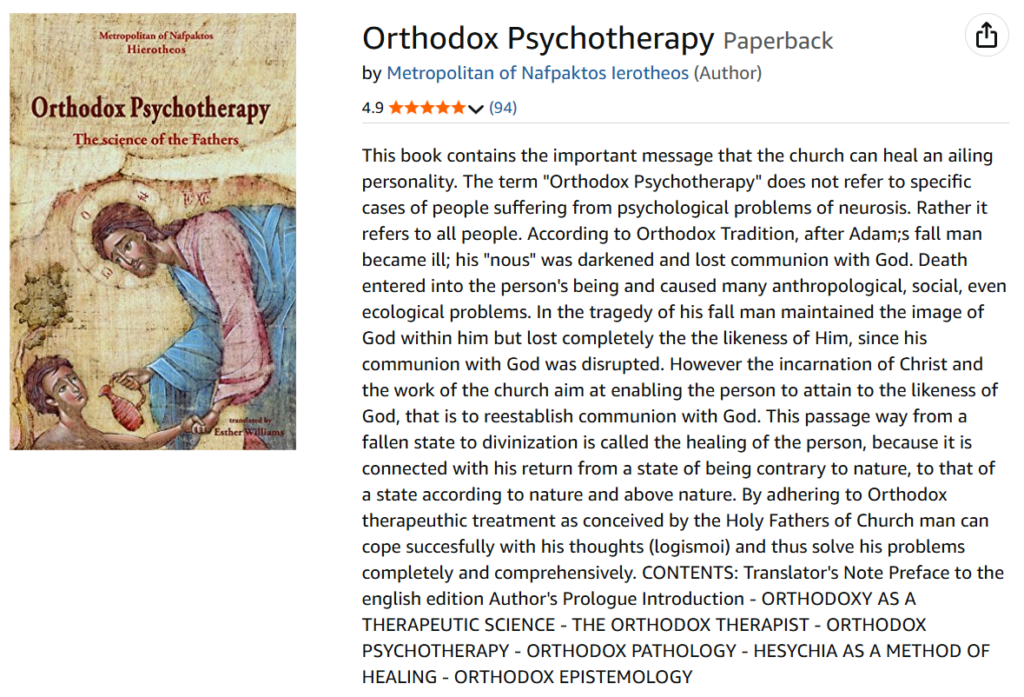
According to this view — deeply rooted in the teachings of the Holy Fathers, Scripture, and the Philokalia — Orthodoxy is not primarily a philosophy, moral system, or religious ideology, but a therapeutic method whose goal is:
- Cleansing the soul from passions (spiritual illnesses)
- Healing the nous (the spiritual eye/heart/intellect, often scattered by sin)
- Restoring communion with God
- Leading to theosis (deification / union with God by grace)
Core Elements of Orthodox “Therapy of the Soul”
The Church functions as a spiritual hospital, and the healing process typically includes these interconnected practices:
- The Sacraments (especially the “medicine of immortality”)
- Regular Holy Confession → diagnosis of the soul’s illnesses + removal of sins
- Frequent Holy Communion → true healing and union with Christ
- Holy Unction → healing of soul and body
- Ascetic struggle (podvig) against the passions
- Watchfulness (nepsis) over thoughts (logismoi)
- Cutting off evil thoughts at their beginning
- Cultivating the opposite virtues
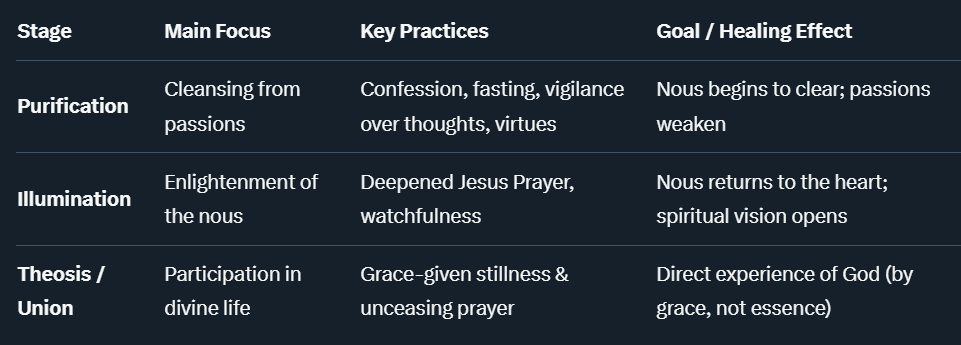
- The Jesus Prayer and Hesychasm (inner stillness)
- The most characteristic method of Orthodox soul-therapy in its deeper stages
- Repetitive, heartfelt invocation:
“Lord Jesus Christ, Son of God, have mercy on me” (often shortened to “Lord Jesus Christ, have mercy”) - Done with attention descending into the heart
- Aims at bringing the nous back into the heart → inner silence (hesychia) → unceasing prayer → experience of God’s uncreated grace/light
Here is how the progression is classically understood:
Many contemporary Orthodox writers emphasize that this traditional spiritual therapy can (and often should) work together with professional psychological/psychiatric help when there are serious mental health issues — especially when done by Orthodox Christian therapists who respect the spiritual dimension.
In Short
Orthodox “therapy for the soul” is not modern talk therapy (though it can cooperate with it).
It is the whole way of life of the Church — sacraments + asceticism + noetic prayer (especially the Jesus Prayer and hesychasm) — aimed at healing the soul from sin and passions, restoring the image of God in man, and ultimately leading him to union with God.
As the Fathers say:
“The Church is a hospital; Christ is the Physician; the goal is therapy leading to theosis.”
Continued in Part 2 – Early Life Abuse
Leave a Reply to Early Life Abuse Cancel reply